Southern Marine Science and Engineering Guangdong Laboratory (Zhuhai)
The Southern Marine Science and Engineering Guangdong Laboratory (Zhuhai) (SML) is a provincial research institution initiated by Guangdong Province and Zhuhai Municipality and operated by Sun Yat-sen University. Committed to becoming a world-class laboratory, SML has established collaborative partnerships with 43 universities, research institutes, and enterprises both domestically and internationally, enhancing the breadth and depth of marine scientific research through joint contributions, shared interests, and mutually beneficial development. Guided by the principle of targeting global scientific frontiers, serving major national needs, and supporting local economic growth, SML pursues excellence in marine science and engineering.
SML implements a director-led governance system under the supervision of the governing board and the guidance of the academic committee. To address needs across scientific exploration, economic development, national strategy, and human health, SML has established an integrated organizational structure comprising goal-oriented Innovative Research Teams, a free-spirited Frontier Research Centre, openly-shared Public Platforms, and highly efficient Administrative Departments.
OUR HARD POWER
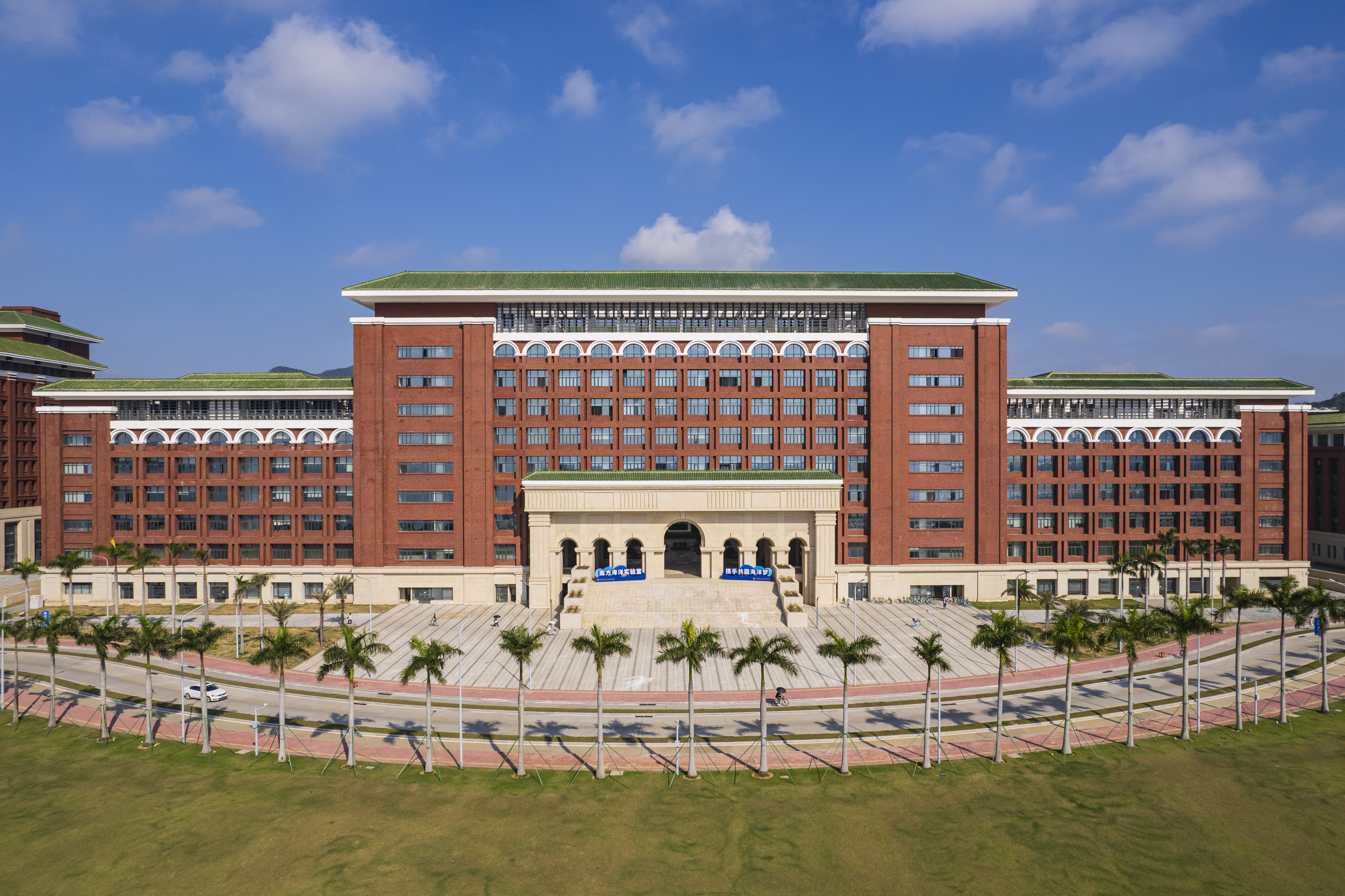
Located in the Marine Science Complex on the Zhuhai campus of Sun Yat-sen University, SML occupies a main building area of over 100,000 square meters. It is equipped with advanced facilities, including an intelligent carrier of unmanned observing systems, Zhuhaiyun, a comprehensive research and training vessel, Zhong Shan Da Xue, a world-leading supercomputer, Tianhe-2, and a suite of experimental facilities for ocean engineering. SML is steadily enhancing its capacity through the development of world-class public platforms.
As part of its vision to become an internationally recognized and nationally leading scientific lab, SML has established a range of large-scale public platforms: Vessels Operation and Management Center, Zhuhai-Hong Kong-Macao Marine Risk Monitoring and Forecasting Research Center, Ocean Data Center, Marine Biological Resource Bank, Marine Element and Isotope Facilities, and Marine Engineering and Technology Testing Station.
OUR PEOPLE
SML currently has over 1,100 employees and affiliated members, including more than 150 national-level leading talents. This forms a robust talent ecosystem led by leading scientists and supported by dynamic young researchers and engineers. As a cradle for marine education, SML is dedicated to cultivating future talents and graduate students through interdisciplinary training and industry-university-research collaboration.
OUR WORK
SML focuses on four core tasks: Marine Ranching and Healthy Aquaculture, Marine Engineering and Intelligent Equipment, Marine Safety and Disaster Prevention and Mitigation, and Marine Ecological Environment and Carbon Sink. SML has achieved a series of landmark results, including:
OUR VISION
In alignment with national strategies and regional development goals, SML is firmly anchored in the Greater Bay Area, while radiating its impact across the South China Sea and extending its reach into the global oceans. Upholding the ethos of "To be the first or the best," SML is advancing key initiatives including marine ranching, the Intelligent Swift Ocean Observing System (ISOOS), the Digital Twins of the Ocean, the Guangdong-Hong Kong-Macao Innovation Research Center for Ocean Negative Carbon Emission (ONCE), the Zhuhai-Hong Kong-Macao Marine Risk Monitoring and Forecasting Research Center, the Blue Ocean Technology Industrial Park, and the Marine Science Popularization Center. Through these endeavors, SML is dedicated to establishing itself as a national strategic pillar in marine science and technology and an international nexus for pioneering ocean research. By accelerating the translation of scientific achievements into practical applications, SML aims to energize the marine economy of Guangdong and Zhuhai, empower the high-quality "blue engine" of the Greater Bay Area, and contribute meaningfully to the advancement of national maritime strength and the sustainable future of our global ocean.